Italian American Writing
These stories have been in publications including The Salem Gazette, Ambassador and Italian America magazines.
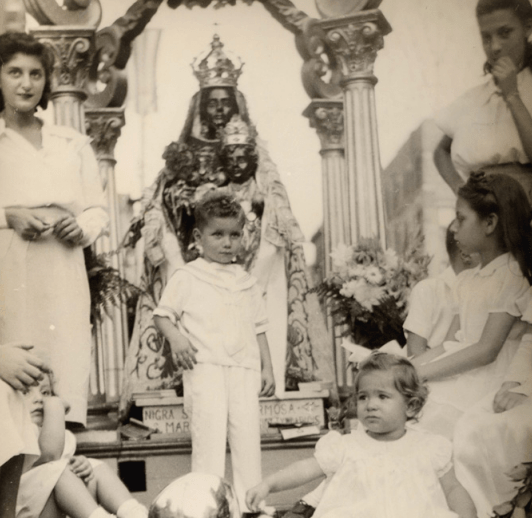
The Black Madonna: Earth Goddess or Biblical Saint
The Phoenix Bar on East 13th Street in New York’s East Village holds within its heart a mysterious secret. These days, the bar hosts Abba singalongs and drag shows. No one would guess that the building once housed
a funeral parlor with a small adjacent chapel that provided Sicilian immigrants with a quiet place to venerate a black statue of the
Madonna…
Read more of this article at https://kristinmdagostino.com/wp-content/uploads/2024/05/black-madonna.pdf
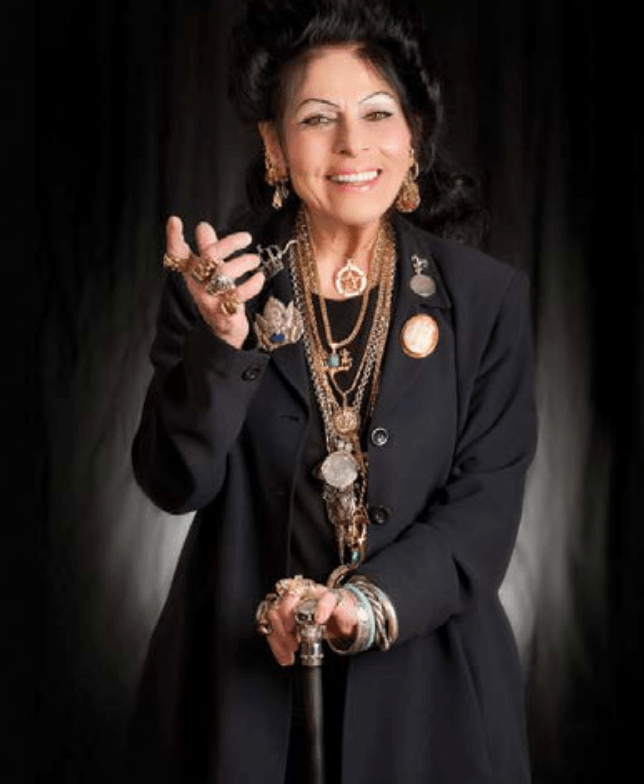
Witches Brew: A Living Strega Who Mixes Her Own Brand of Folk Magic
I first met Lori Bruno fifteen years ago while working as a reporter in Salem, Massachusetts’s, covering the so-called Witch City’s mix of art, maritime history along with its vibrant pagan community. At the time Bruno, 68, was introduced to me as a true Italian strega, one who practiced Sicilian witchcraft…
Read more of this article at https://kristinmdagostino.com/wp-content/uploads/2022/01/italian-america-magazine-winter-2022-dragged-1.pdf

From Caves to Castles- Exploring Southern Italy’s Cultural Treasures
At 26 years old, having finished a five-month stint working as a nanny in Salerno, I celebrated my newfound freedom by renting a Fiat with a friend and heading south. The rocky Amalfi Coast’s bustling port towns gave way to verdant hills dotted with olive trees and farmhouses. My companion, a cheerful New Zealander named Arian- na, was also a nanny whom I’d met just a few weeks earlier when we were both flirting with the same Italian guy at the local tourism office…
Read more of this article at https://kristinmdagostino.com/wp-content/uploads/2021/08/italian-america-magazine-summer-2021-copy-dragged.pdf
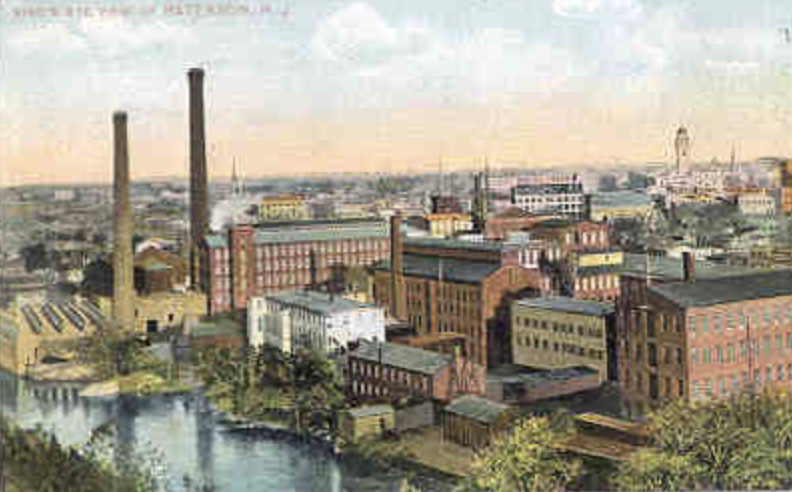
Bound by Silken Thread
Unraveling a Family’s Legacy in Silk City
I like to imagine my great-grandma, Anna, at 37 walking home from the silk factory in Paterson, New Jersey, during the late 1930s. Her long, gleaming black hair, never once cut, would be coiled into a bun—sweaty tendrils escaping around her temples. Her olive cheeks would be flushed from working for six hours as a quill winder beside tall windows that let in the burning sun. With her two sisters by her side, she’d walk the three miles home to Hawthorne in silence, too weary to gossip, her heart comforted by the thought of the pot of pasta e fagioli her ten-year-old daughter would have waiting for supper…
Read more of this article at https://kristinmdagostino.com/wp-content/uploads/2020/12/bound-by-silken-thread.pdf
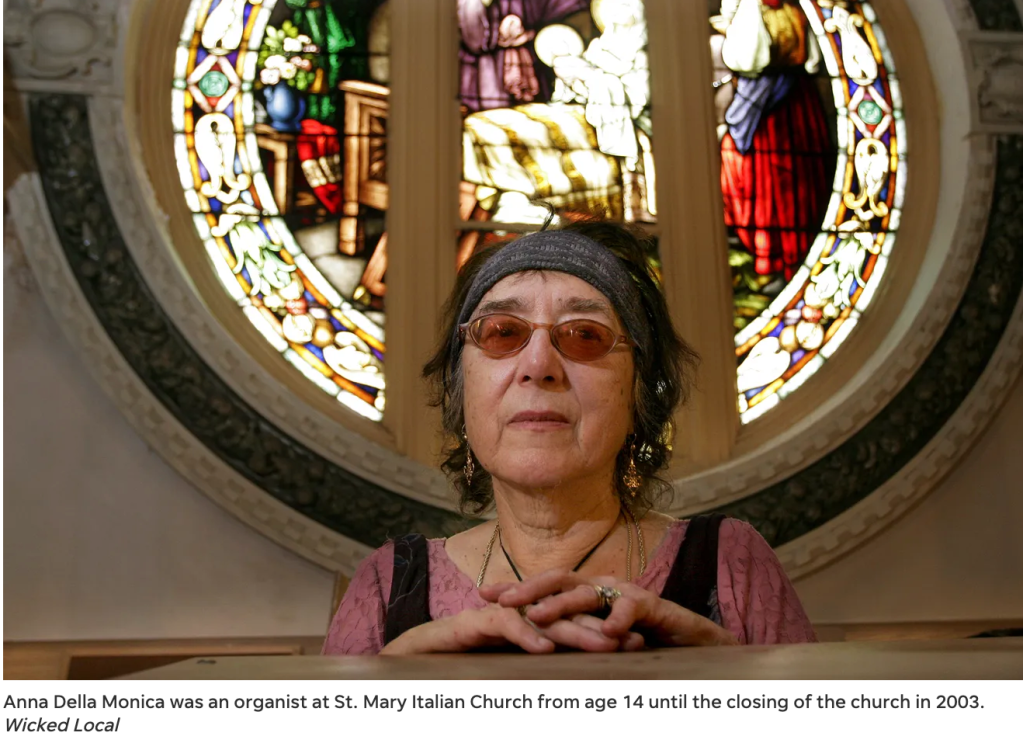
Salem’s Little Italy
Some would say that Salem’s Italian neighborhood began in a small room next to a fish market at 27 Front St. in the year 1914. It was then that Rev. Pietro Piemonte began the city’s first Italian Mass with a group of immigrant families who didn’t speak English. According to city records from 1910, about 1,300 people were Italian, 3 percent of the population. Many families had settled into the area around Margin, Endicott, High and Prescott streets. By 1925, Rev. Piemonte’s congregation had raised enough money to build the St. Mary Italian Church on Margin Street, which quickly became the center of the community…
Read more of this article at https://www.wickedlocal.com/story/salem-gazette/2008/09/12/salem-s-little-italy-part/38666105007/
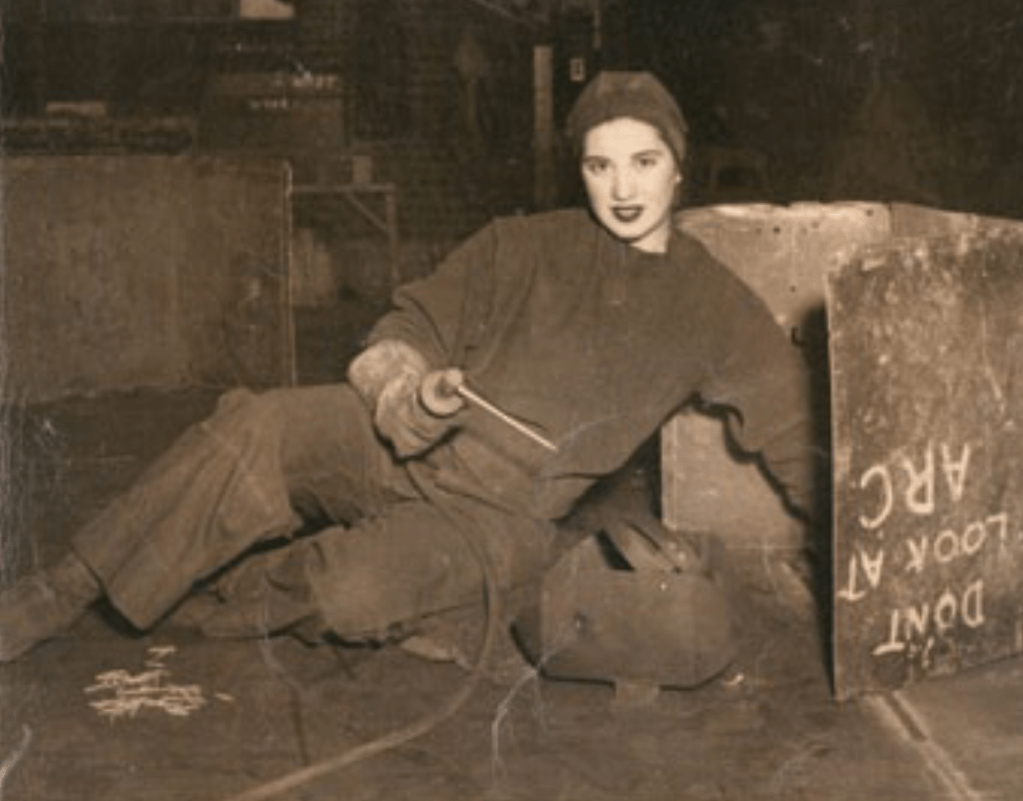
Lipstick and Steel-toed Boots:
A Real Life Winnie the Welder Recalls Her WWII Adventures
The melancholy cry of gulls; the crackle of sparks; the click clack of work boots on a ship’s deck. These sounds play like a familiar song in the mind of 99-year-old Peggy Citarella when she recalls her days as a welder in the Charlestown Navy Yard in the 1940s.
On a recent visit to her home in Burlington, Vermont, Citarella beams from beneath perfectly coifed white curls as she shares photos from her welding days. A closer look reveals that seven decades haven’t dimmed the radiant smile of the twenty-one-year-old girl in coveralls, her dark hair curled into a pageboy, a welding gun clutched in her gloved hand. The story is one she’s told many times throughout the years.
One day, while working at a candy factory near her home in Somerville, Massachusetts, Citarella, then just twenty years old, restlessly scanned the ‘Help Wanted’ ads for a better paying job. “I kept seeing the word welder in the men’s section,” she recalls. “I looked it up the dictionary, and it sounded interesting…”
Read more of this article at https://kristinmdagostino.com/wp-content/uploads/2020/12/peggystory-1.pdf
Stories about History
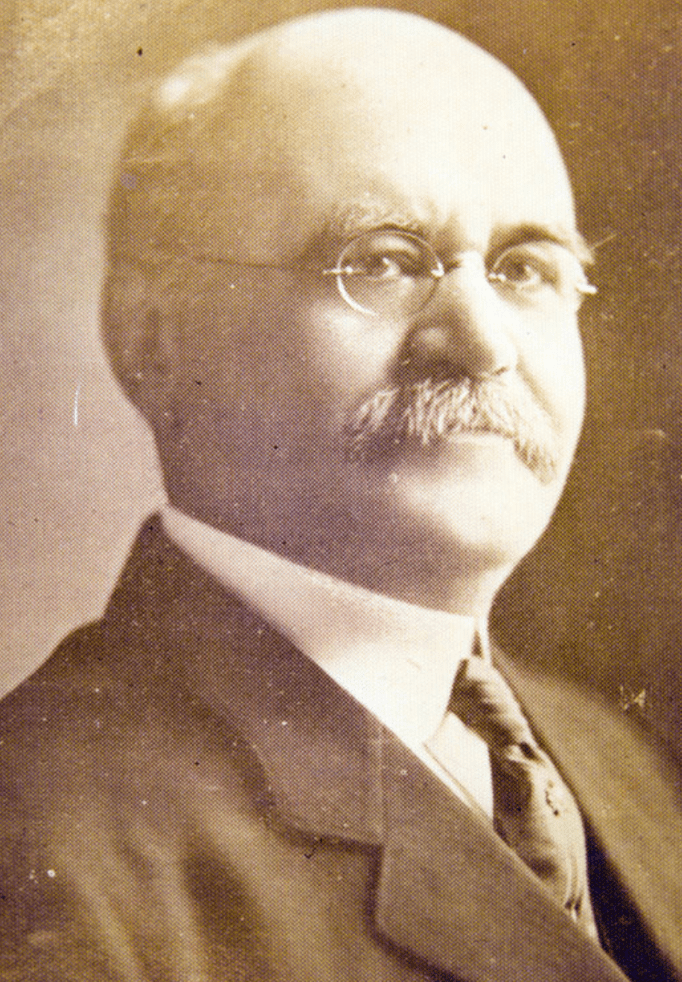
Asheville Archives: E.W. Grove’s influence on Asheville’s image
In 1892, author George Chapin published the book Health Resorts of the South. Not surprisingly, it included a chapter on Asheville. The section began with a quote by poet John Greenleaf Whittier: “And the pale health seeker findeth there/the wine of life in the pleasant air.”
At that time of the book’s publication, the world was in the throes of one of history’s deadliest diseases: tuberculosis. In the 19th century it’s estimated that the disease killed 7 million people per year. Highly contagious, doctors believed symptoms — which included debilitating pain in the lungs and coughing up blood — could be controlled by bed rest and time spent in the mountains.
Read the rest of this article at https://mountainx.com/news/asheville-archives-e-w-groves-influence-on-ashevilles-image/
 Kristin D'Agostino